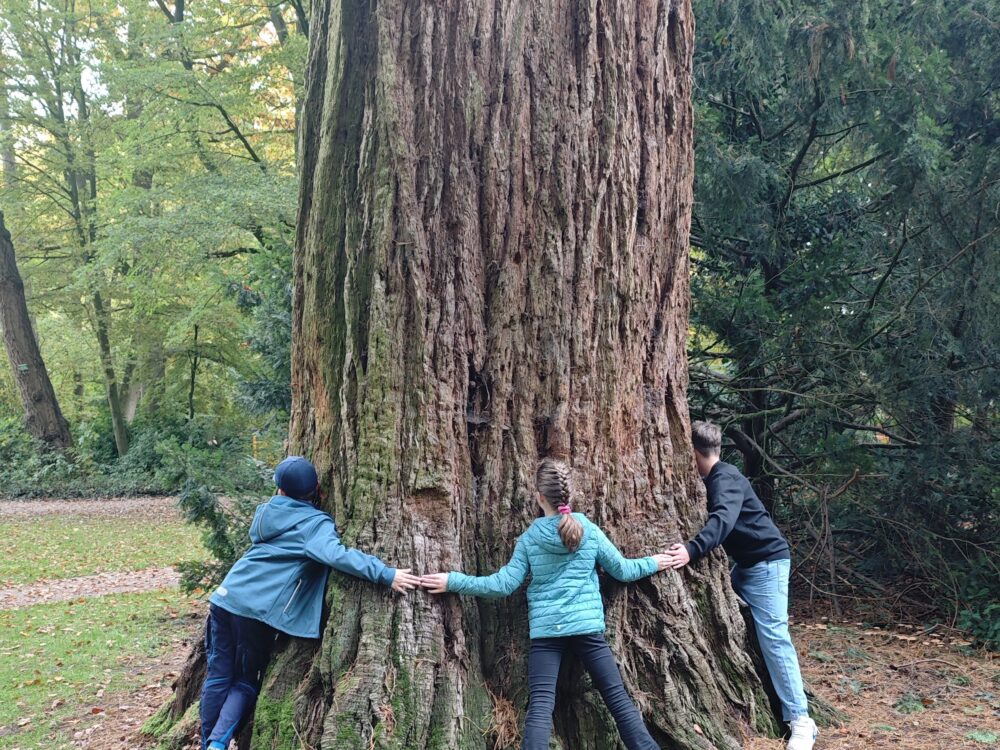
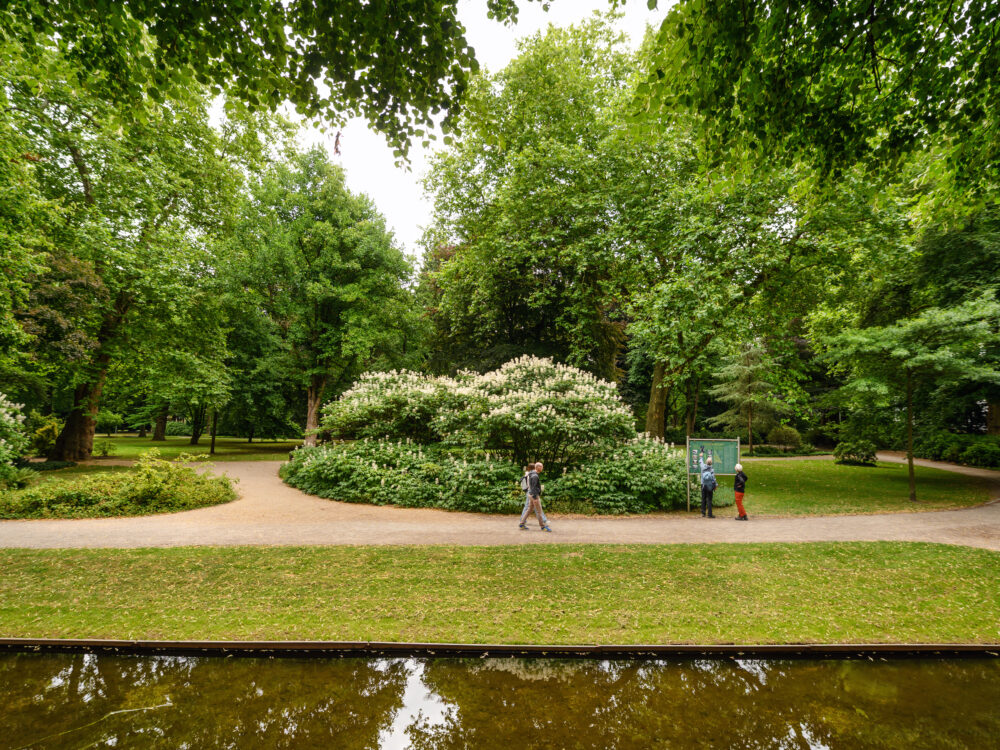
Historic gardens

The gardens of Kleve invite you to explore and linger – nestled in a unique cultural landscape with roots in the 17th century. Back then, Johann Moritz von Nassau-Siegen dreamed of transforming his residence city into a grand work of garden art. Even today, his visions shape the cityscape – sometimes historical, sometimes poetic, always impressive.

"Build, dig, plant, don't let it discourage you – for those who come after you will still enjoy it." – Johann Moritz von Nassau-Siegen (1604 – 1679)
The Amphitheater

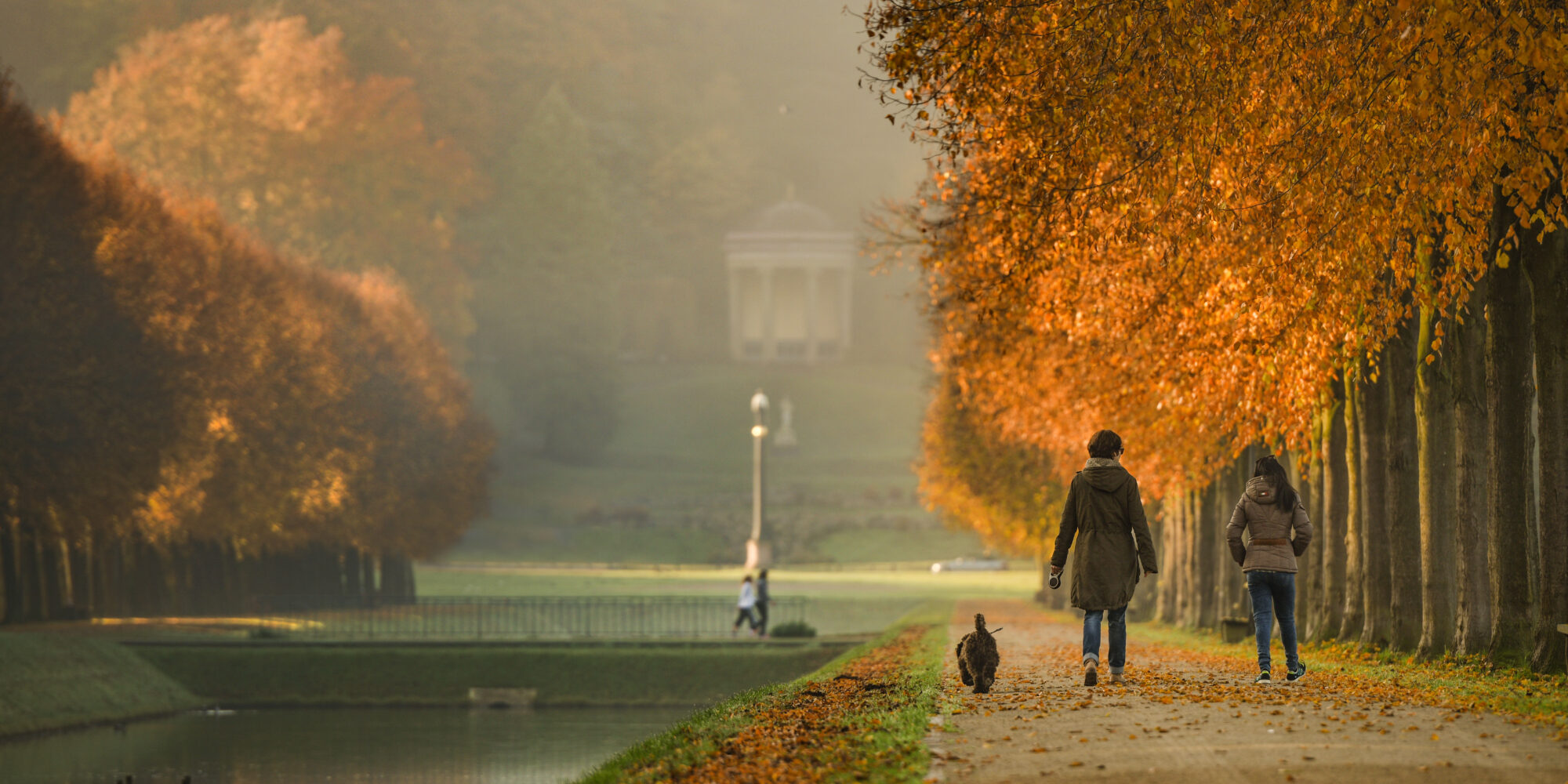
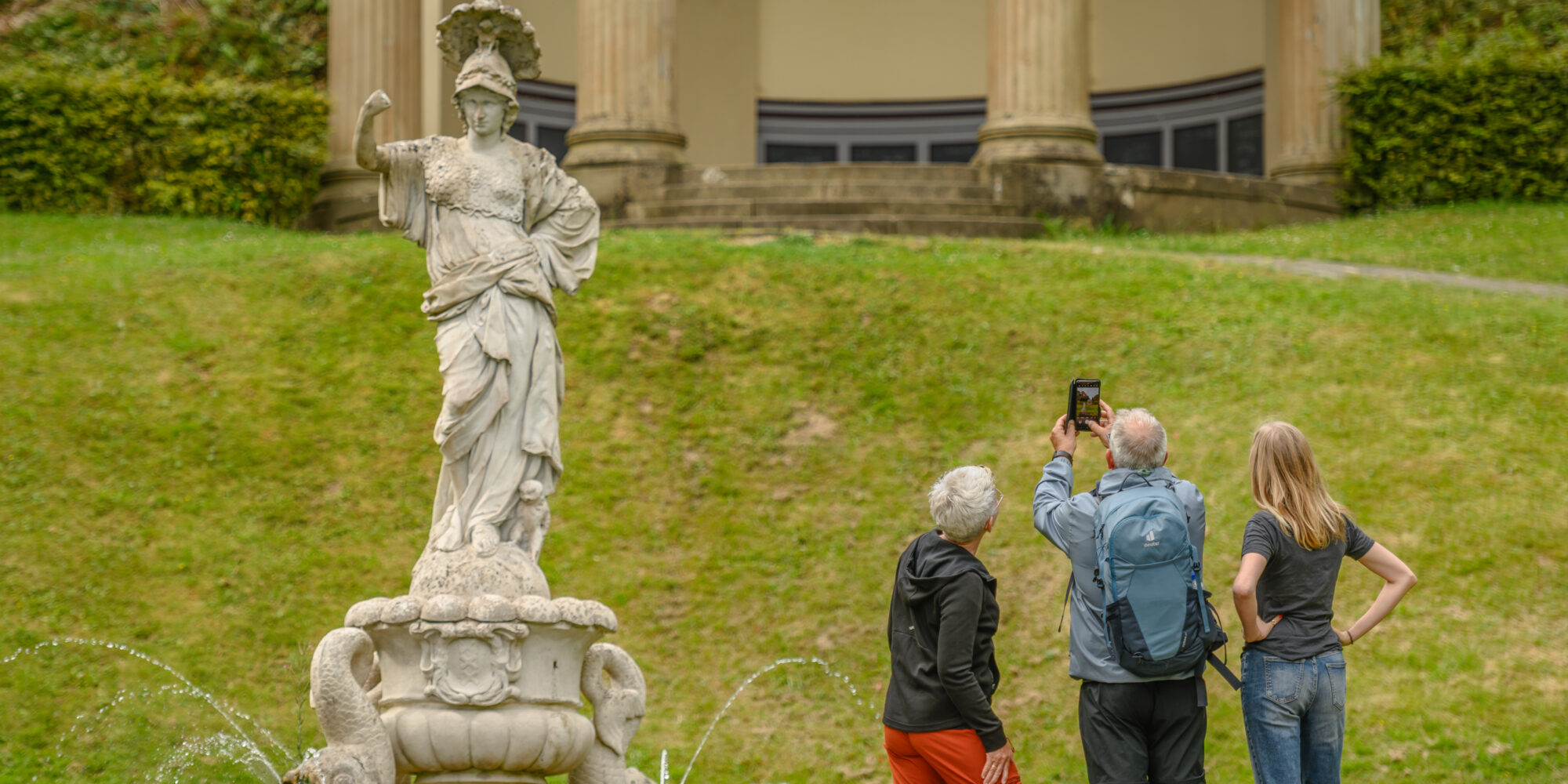
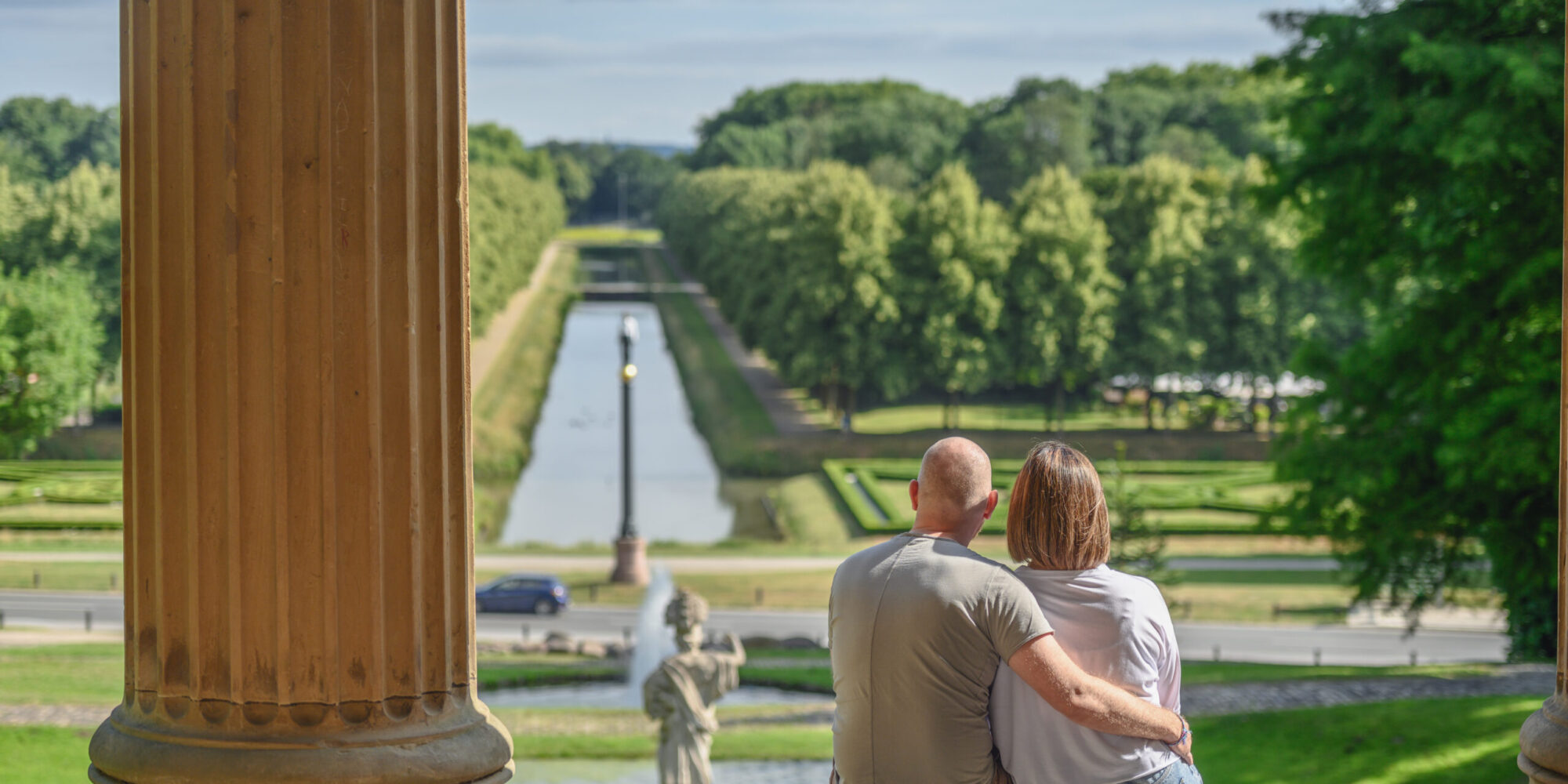
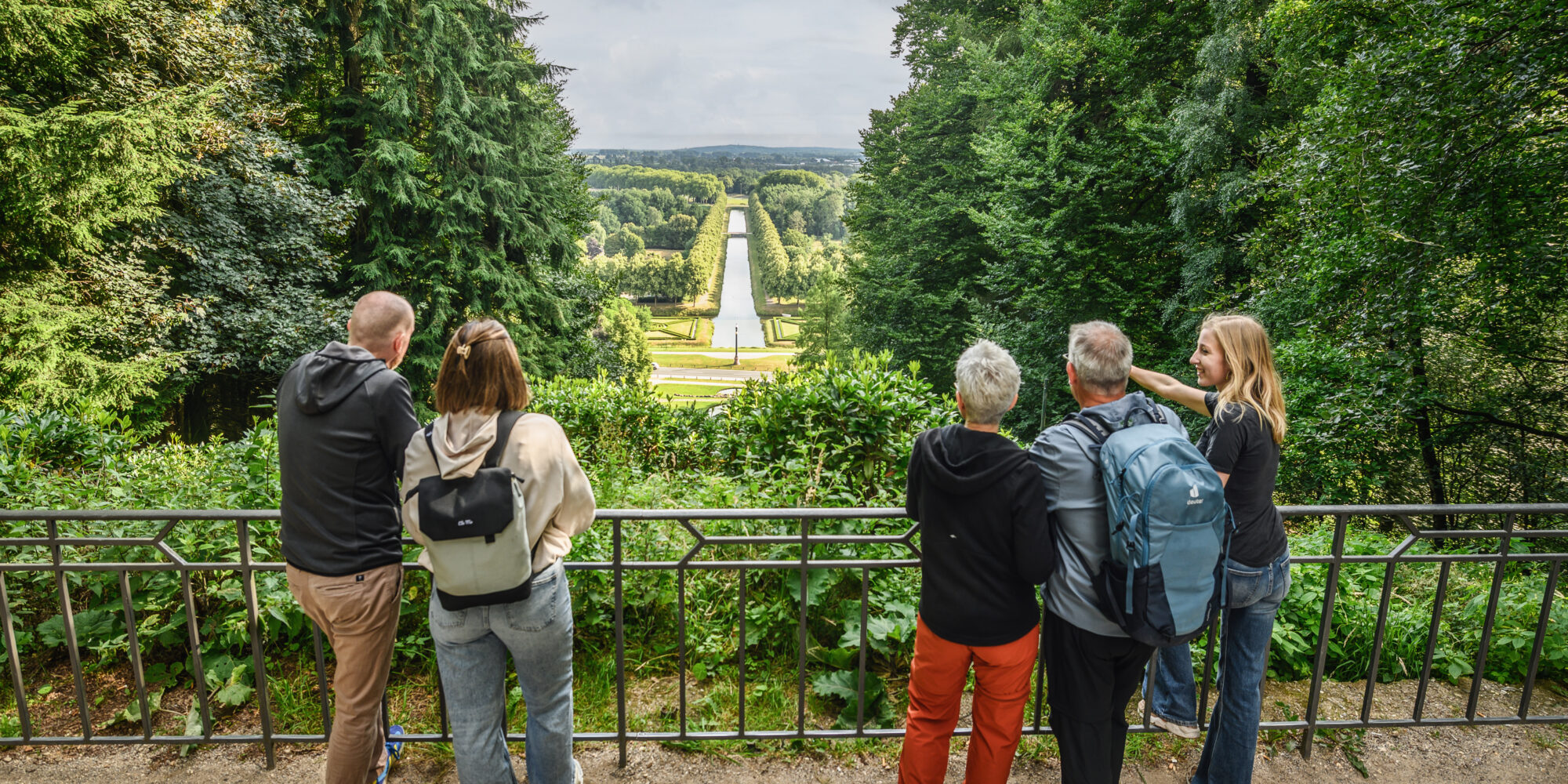
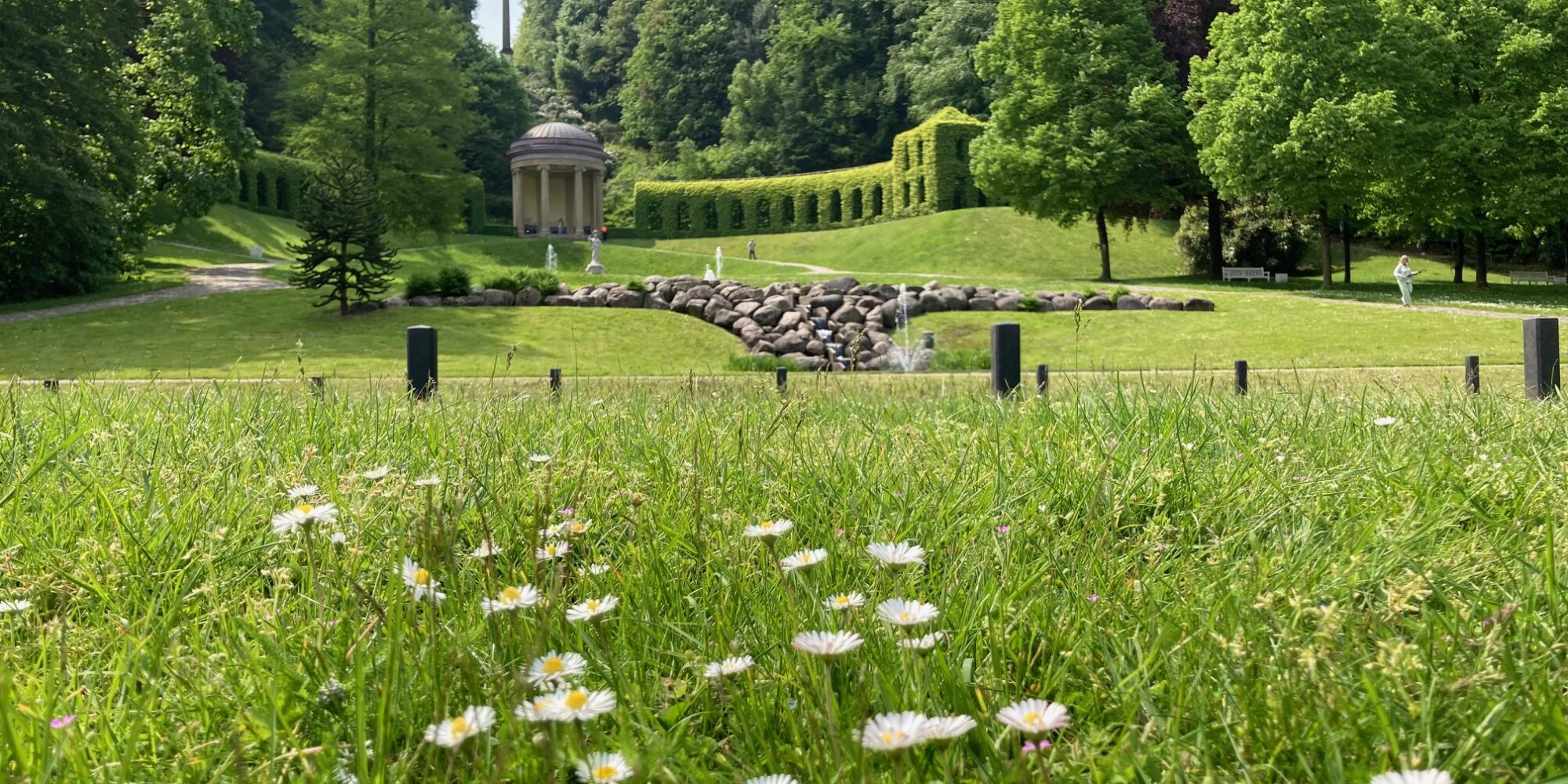
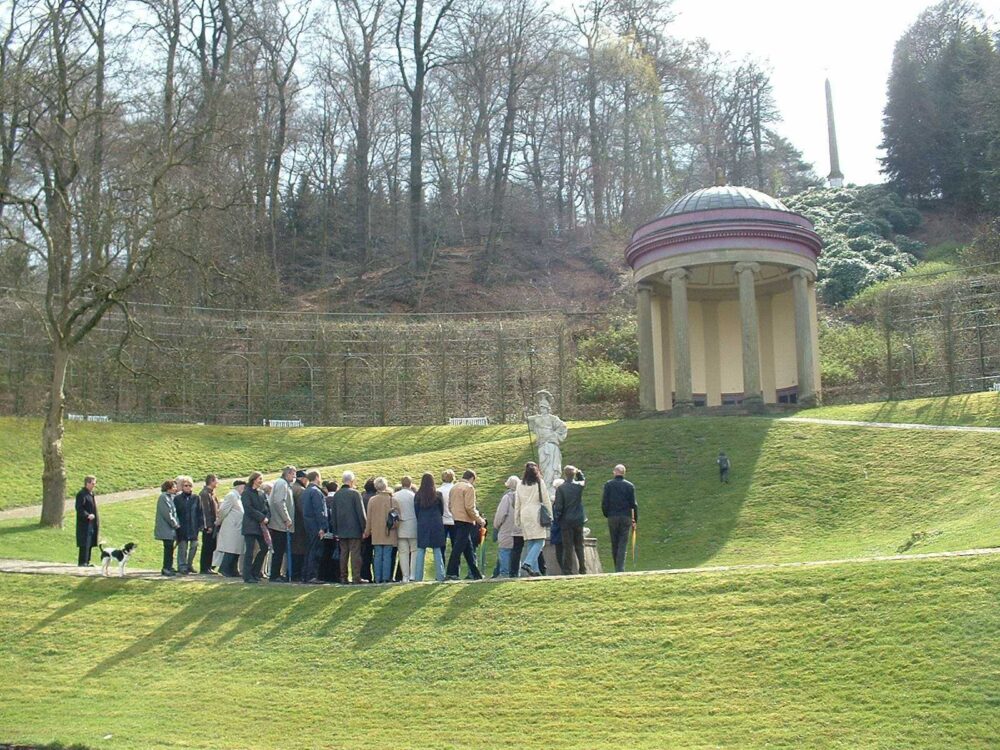
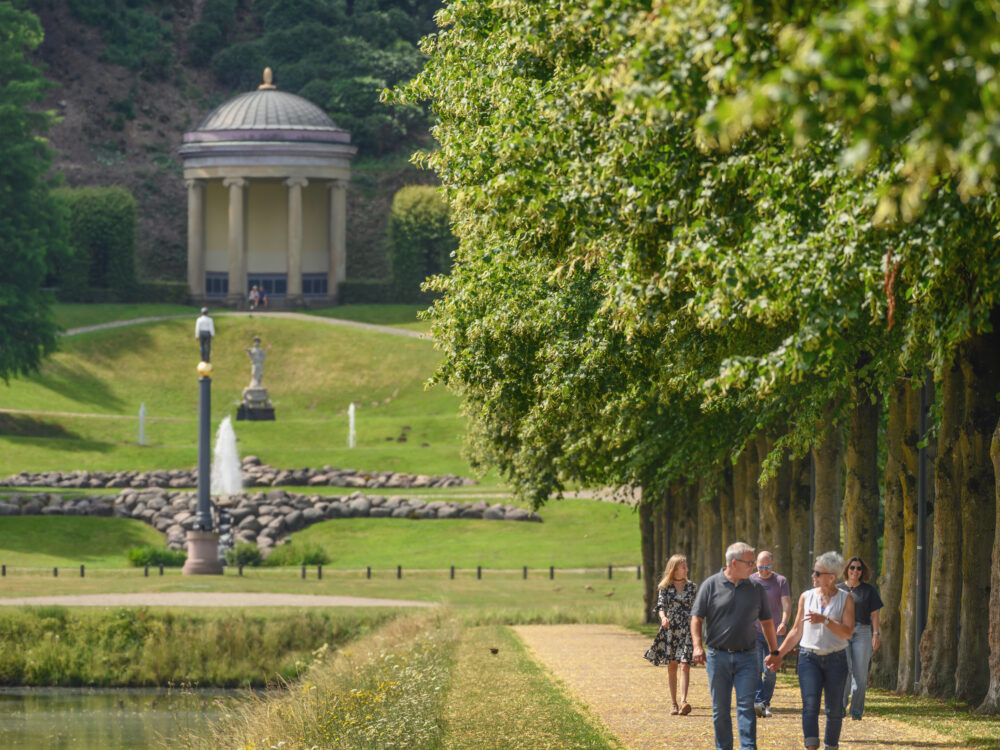
A particular highlight is the amphitheater at Springenberg. On terraced levels, the sky and landscape are reflected in the pools of water. In the center, the statue of Pallas Athena stands guard, while in the background the obelisk at the Copper Knob rises – an impressive vista, typical of Baroque garden design. The Copper Knob viewpoint is located in the idyllic Tiergarten forest and, on a clear day, offers a breathtaking view stretching all the way to the Rhine plain.

Opposite, on the other side of the street, stands the Iron Man . In 2004, on the 400th anniversary of Johann Moritz's birth, the historic "Iron Man," originally erected in 1653 and destroyed in 1794, was reinterpreted at its original location with a sculpture by Stephan Balkenhol.

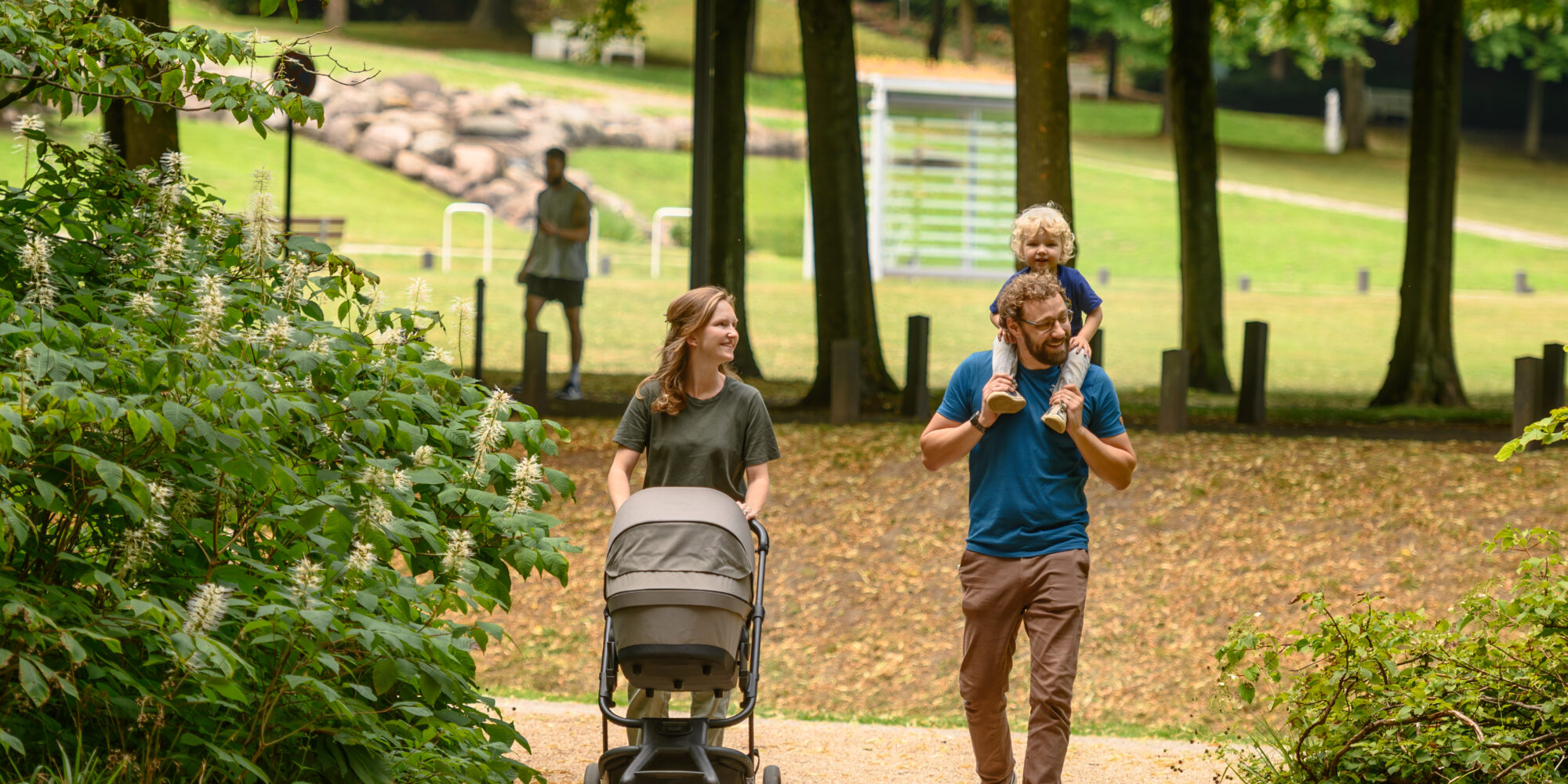
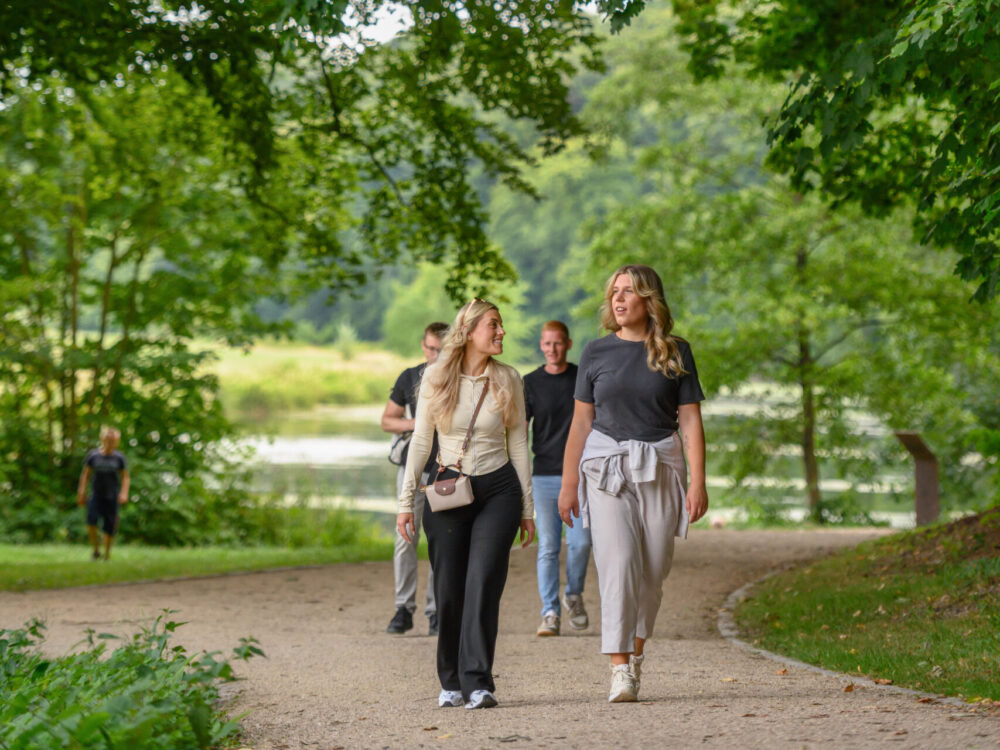
Two pedestrians are walking along a path between trees through the gardens. In the background are a pavilion and a statue, next to a fountain.

The forest garden

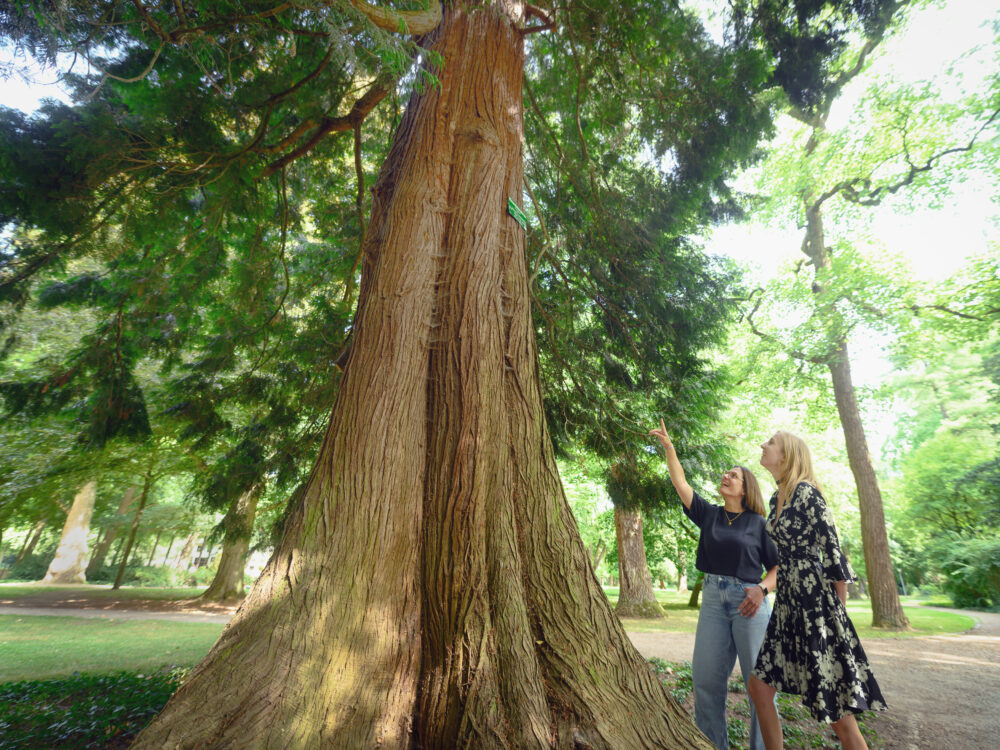
The forest garden was created in 1782 under Julius Ernst von Bugenhagen. Inspired by botanical gardens, he had around 150 exotic tree and shrub species planted. Many of these still stand today. In the 18th century, a healing spring transformed the garden into a popular spa park. In the 1820s, Maximilian Friedrich Weyhe gave the park the character of an English landscape garden.

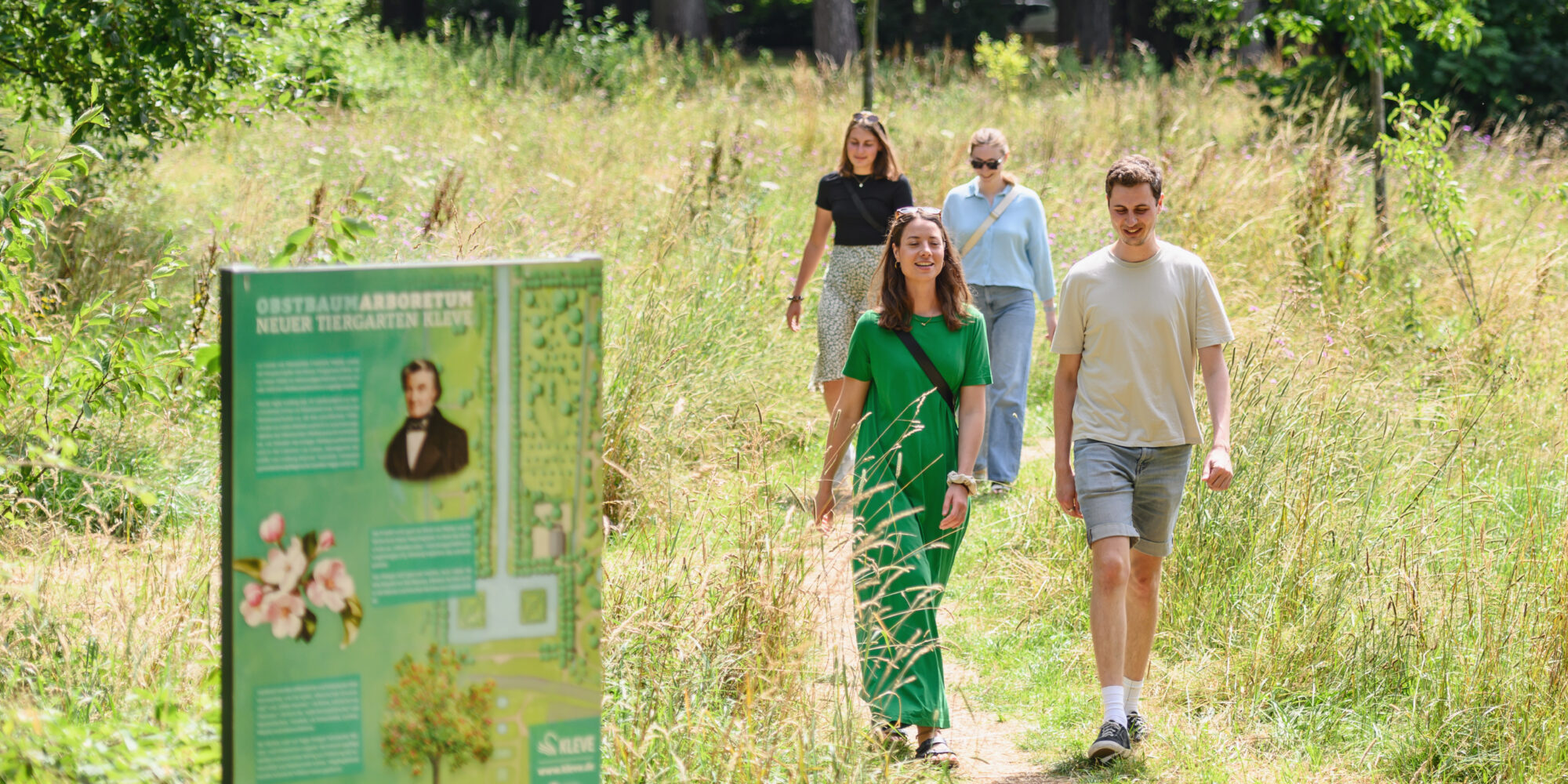
Tip: Take a detour to the fruit tree arboretum!

Two people are standing in front of a large tree in the forest garden of the park. One person is pointing at the tree, while the other is standing next to it. The tree has thick, cracked bark and is surrounded by green leaves.

Moritz Park

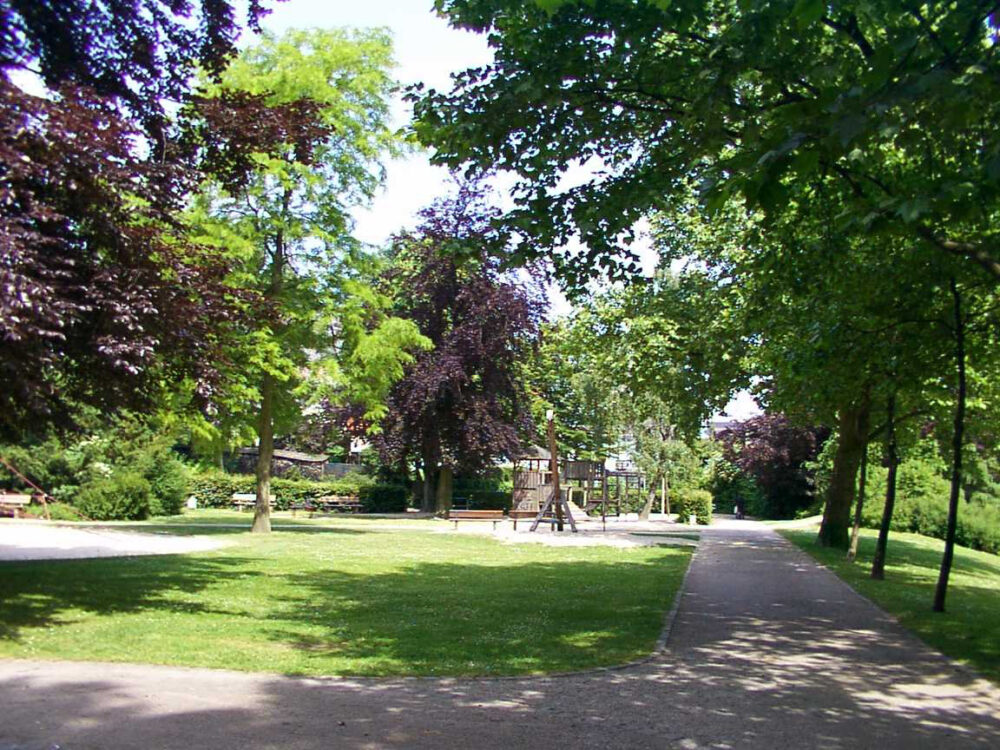
In the upper town, Moritz Park commemorates the former city residence of Johann Moritz, the Prinzenhof. Where a baroque pleasure garden once stretched in the 17th century, a green oasis now invites visitors to stroll. The original park was destroyed in the Second World War – but its memory lives on. Today, Moritz Park is a place to relax, host events, and enjoy leisurely walks.

View of a park with lawns, trees, and a playground in the background. The path runs to the right of the image.

The Old Park

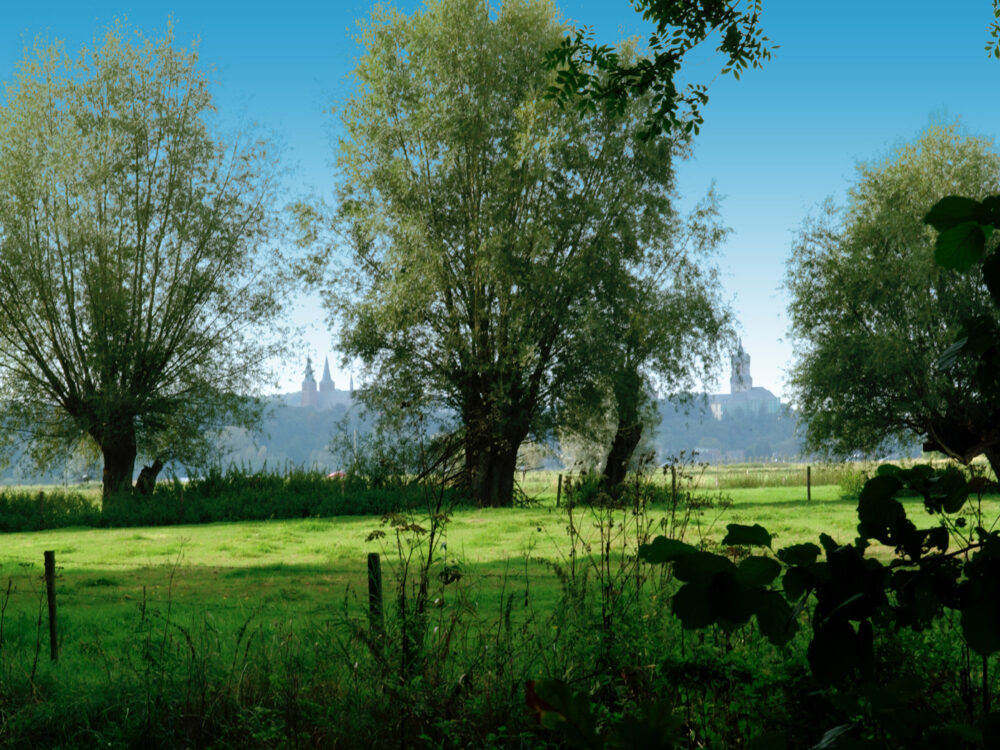
South of the city, Johann Moritz designed a garden landscape with viewing hills, star-shaped paths, and striking vistas. Names like "Kiek in de Pott," "Spitzberg," and "Papenberg" speak of a time when the design of nature carried a message. At the heart of the park lay the Freudenberg country house—once the summer residence of the governor and soon to become an event space for the 2029 State Garden Show.

Two large, green willow trees stand in the foreground, while silhouettes of buildings and towers can be seen in the background, surrounded by a green meadow.

Book garden tours